
MOISTURE CONTROL
Conditioned moisture protects dimensional stability and toughness. Moisture-carrying fillers stay out.
SOLUTIONS
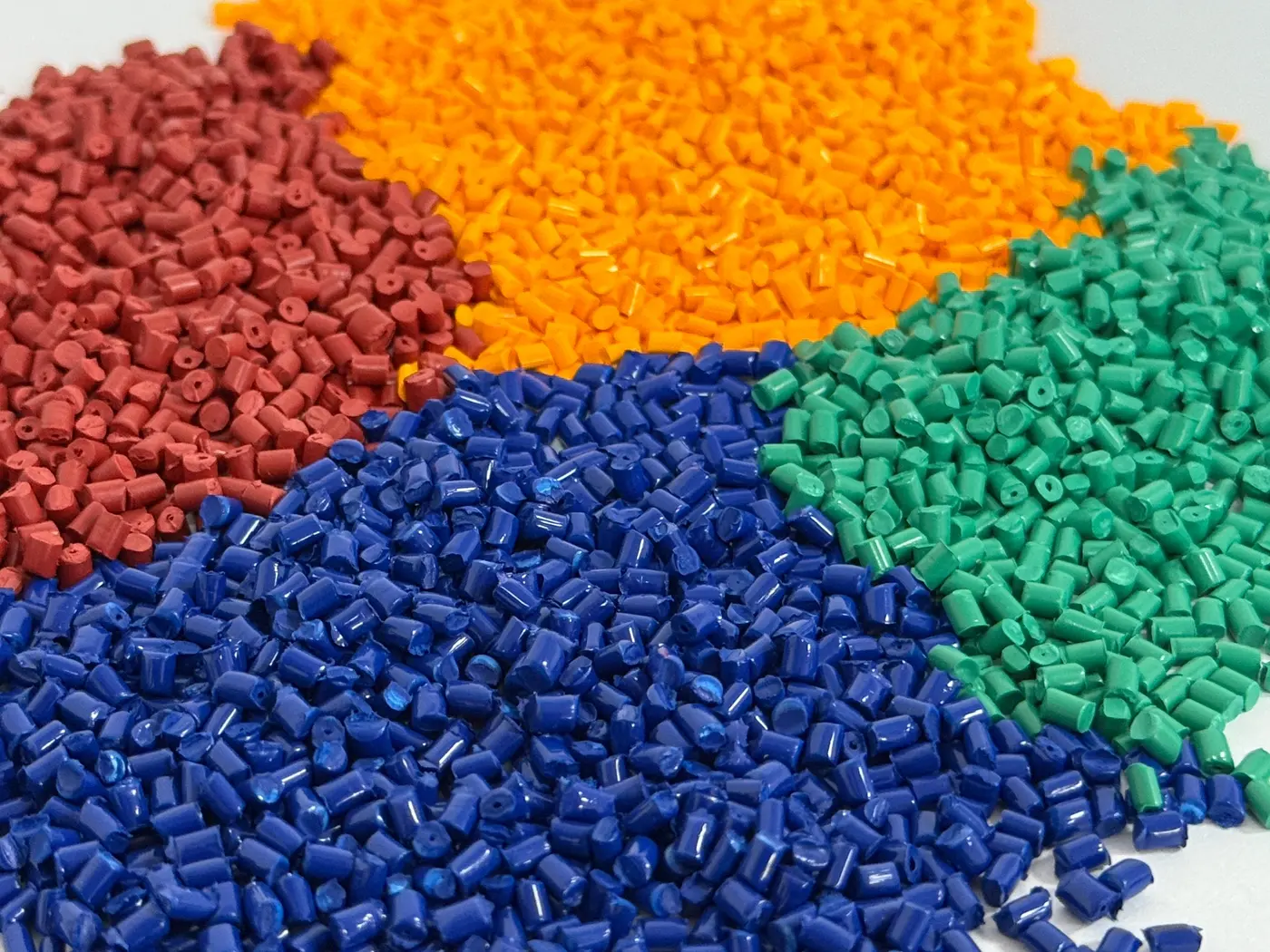
From nylon and high-temperature engineering plastics to high-volume commodity molding — formulated around your polymer, your process and the conditions the part actually sees.
WHAT USUALLY GOES WRONG
The approved shade drifts, usually yellower or duller, at production temperature — or between thick and thin sections of the same part.
Color moving to the surface, chalking, or fading after heat, sunlight, weathering or boiling-water testing.
Brittle cracks, low-temperature failures, or reduced impact strength that appear only once color is added.
A shade that was right in neat resin reads flat or washed out in the production compound.
Streaks, unmelted specks, dark spots, or a surface that will not come up to gloss.
An approved sample that will not repeat — between batches, between machines, or between components of the same assembly.
MATERIAL CONSTRAINTS
Select a resin family to see the requirements that shape the color system.
Conditioned moisture protects dimensional stability and toughness. Moisture-carrying fillers stay out.
The carrier must belong to the PA system. A PE-based masterbatch will not disperse properly.
Boiling-water and high-temperature testing are often required before approval.
!Glass-filled or modified PA grades can change how the approved shade reads in the finished part.
PRODUCT SYSTEMS
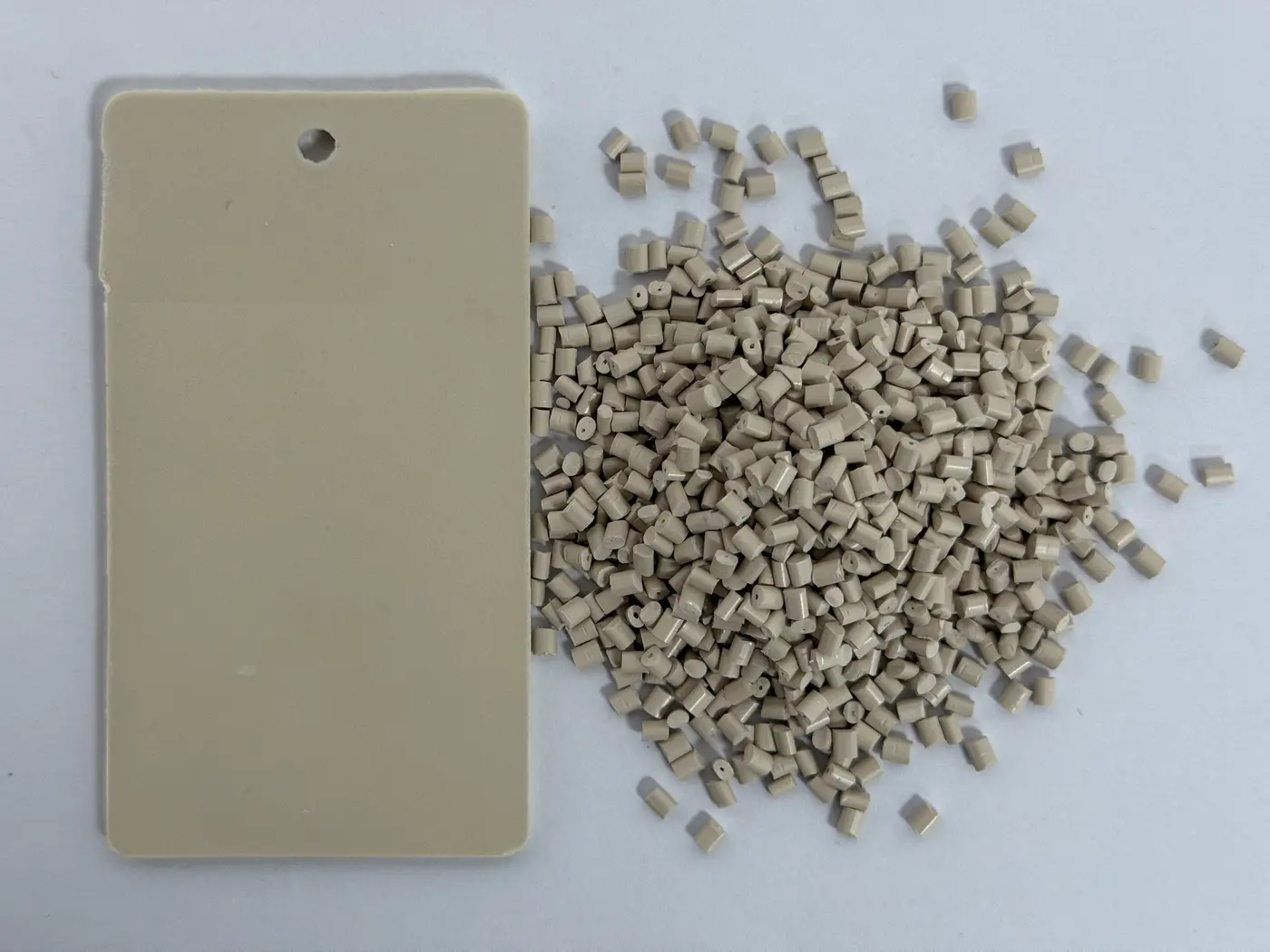
Developed against an approved target and the real application conditions. Pantone, RAL and customer standards can all guide the match.
 01
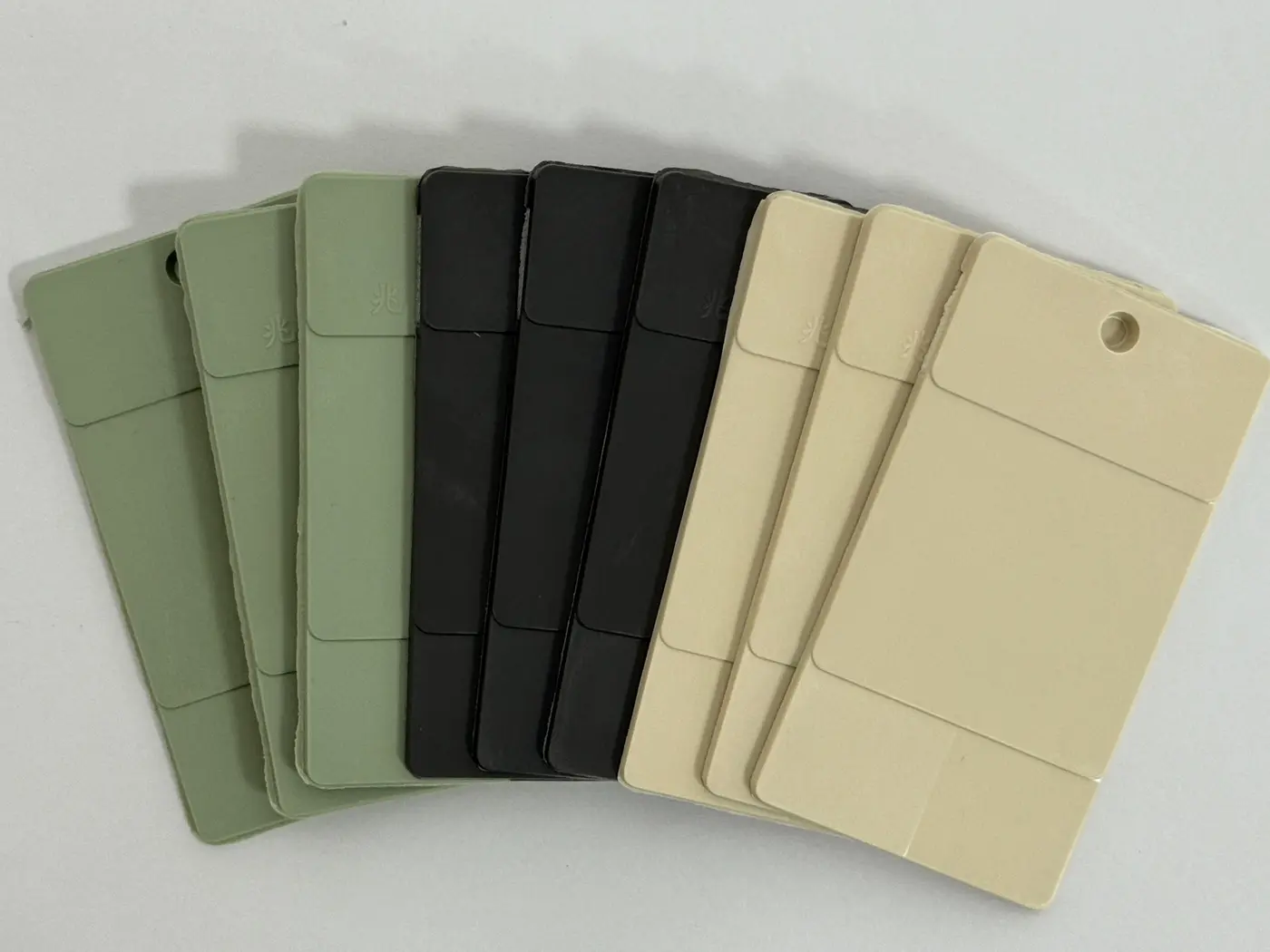
01FOUNDATION COLOR
Formulated for dispersion, hiding power, heat stability and the performance of the selected resin system.
 02
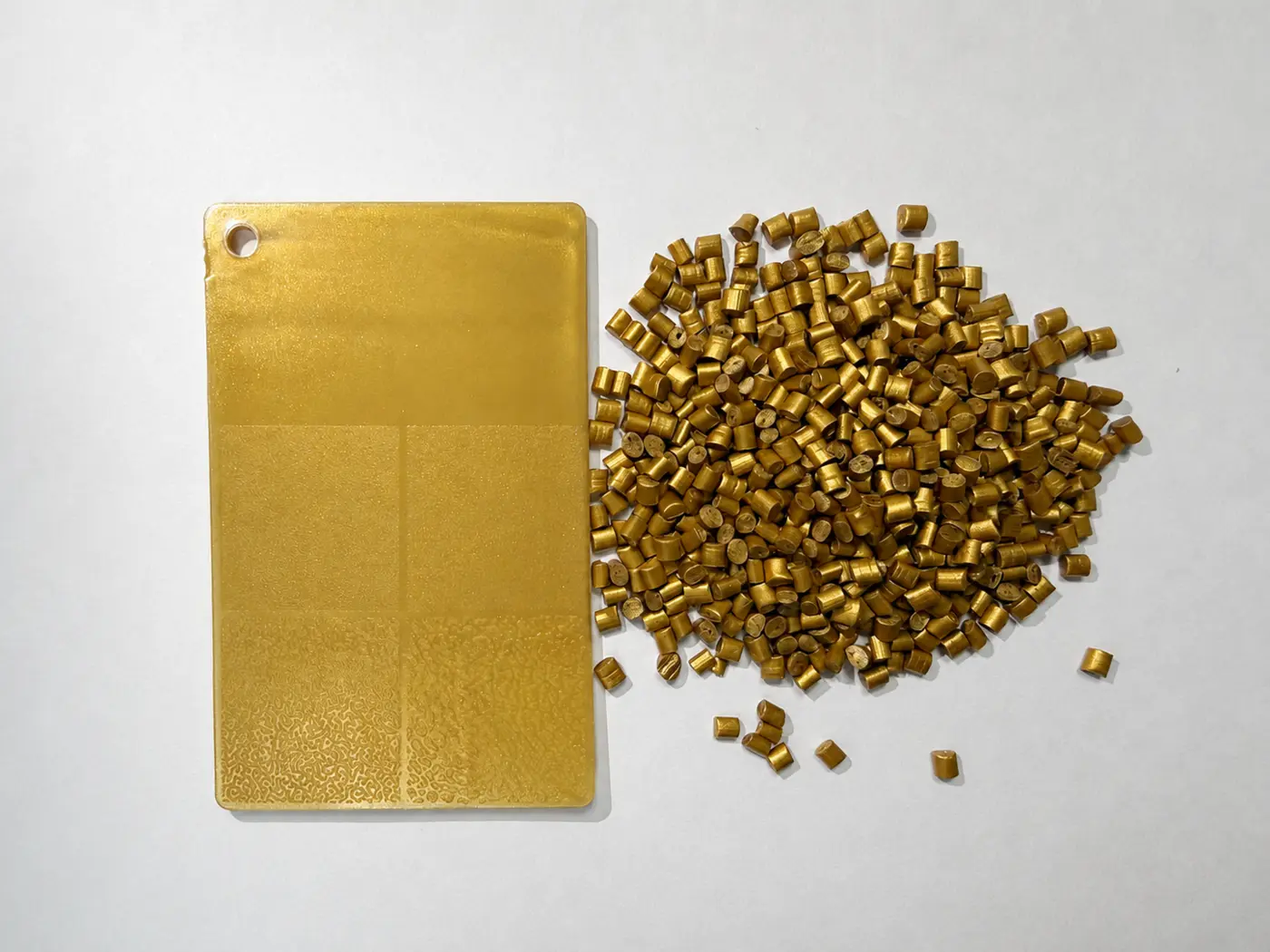
02COLOR & EFFECT
Effect systems developed with close attention to the details that shape the final appearance — dispersion, pigment orientation, flow behavior and surface finish.
 03
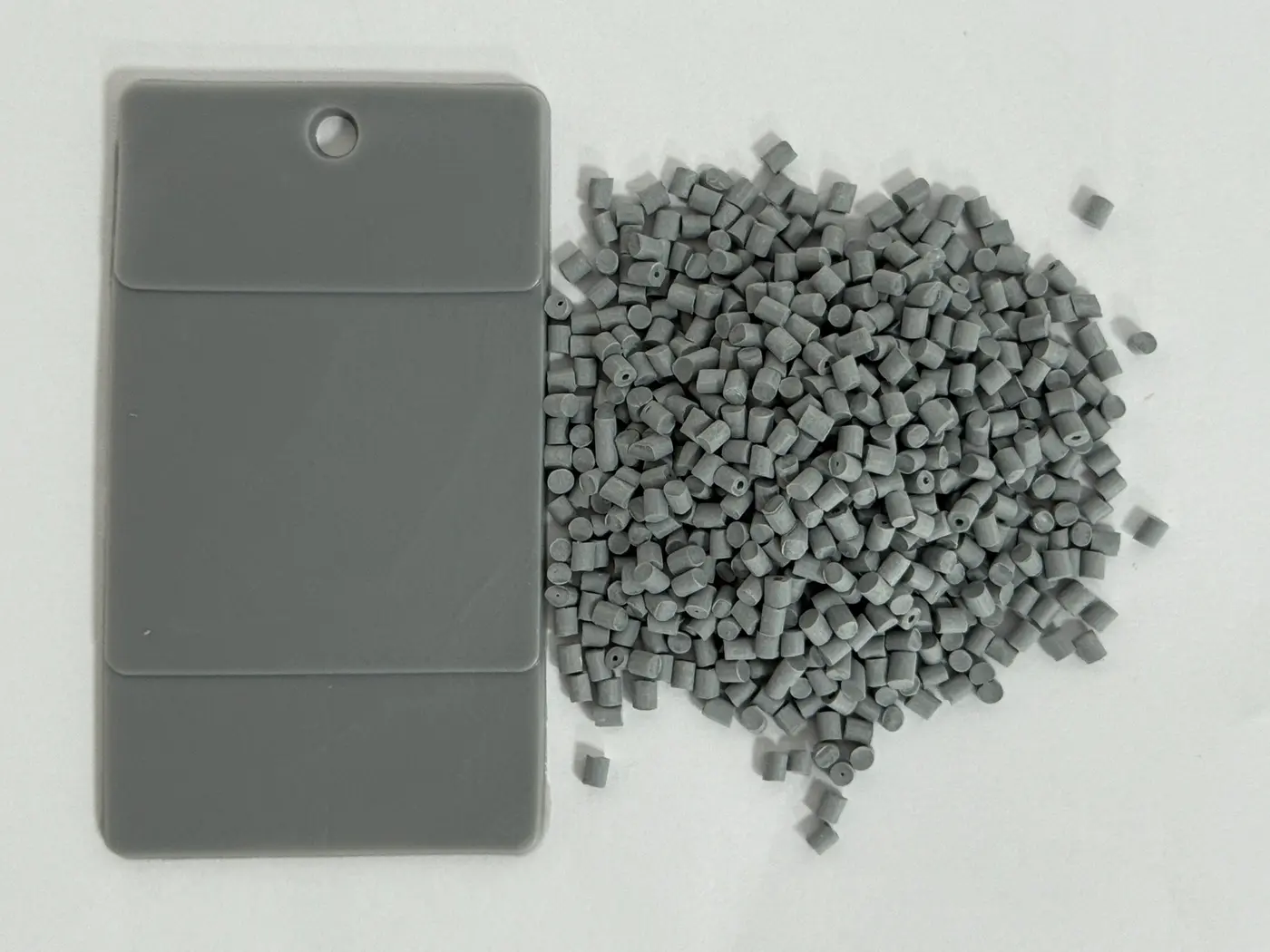
03PERFORMANCE COMPATIBILITY
Color balanced to work alongside functional systems that would otherwise weaken, shift or dull it.
 04
04EXPOSURE RESISTANCE
Pigment and additive systems selected around the exposure profile and the limits of the base polymer.
DEVELOPMENT LOOP
Typical color sampling is completed in 2–3 days once the resin, target and application requirements are clear. Validation scope is agreed for each project.
Resin grade, modifiers, process, exposure and failure mode.
Pigment, carrier and additive system selected for compatibility.
Color measurement, molding observation and the agreed checks.
Three-stage QC, batch report and full traceability.
BRING US THE PART, THE RESIN AND THE FAILURE
Send your Pantone or RAL code, or a physical sample. We'll start with a free sample development and a direct technical discussion.